
Reversing Treatment Resistance in Prostate Cancer
A new study from HICCC researchers solves a longstanding puzzle in tumor biology and finds a potential new therapy.
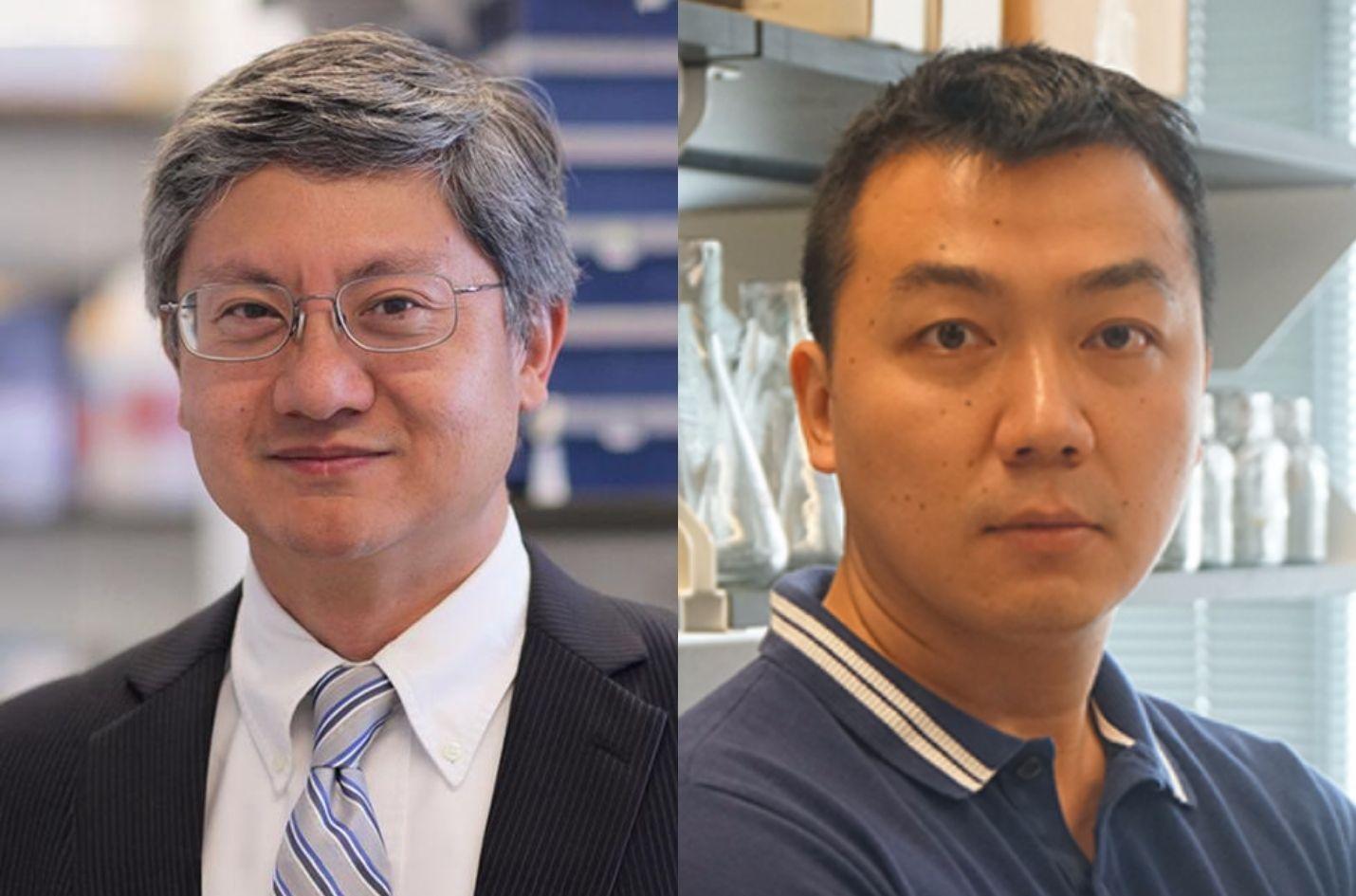
Scientists at the Herbert Irving Comprehensive Cancer Center (HICCC) have discovered a key mechanism that makes prostate cancer cells resistant to the latest drugs used to treat them. Their findings, reported in the current issue of Nature, solve a longstanding puzzle in tumor biology and present preclinical data on a drug compound that could soon enter the clinic.
The work grew out of decades of prostate cancer research by Michael Shen, PhD, co-leader of the Tumor Biology and Microenvironment research program at the HICCC. Shen’s research focuses on lineage plasticity, the ability of cancer cells to reprogram themselves to impersonate other types of cells. “Plasticity is a hallmark of cancer in general and a very important feature of advanced prostate cancer, particularly when it comes to the emergence of treatment resistance,” says Shen. Treatment with androgen receptor inhibitors, which have become the standard of care in recent years, often stimulate prostate tumor cells to adopt neuroendocrine characteristics, rendering them resistant to the drugs.
Previously, Jia Li, a postdoctoral fellow in Shen’s lab and first author on the new paper, identified that these changes are not genetic - they do not stem from mutations in the cells’ DNA. Instead, the cells make epigenetic changes, altering the way their genes are expressed. That led Shen to contact Chao Lu, PhD, co-leader of the Cancer Genomics and Epigenomics research program at the HICCC. “When Jia and Michael came to approach us, we definitely found this project very intriguing,” says Lu. His lab quickly set to work profiling how the prostate tumor cells altered the modifications of their histones, DNA-binding proteins that serve as major regulators of gene expression.
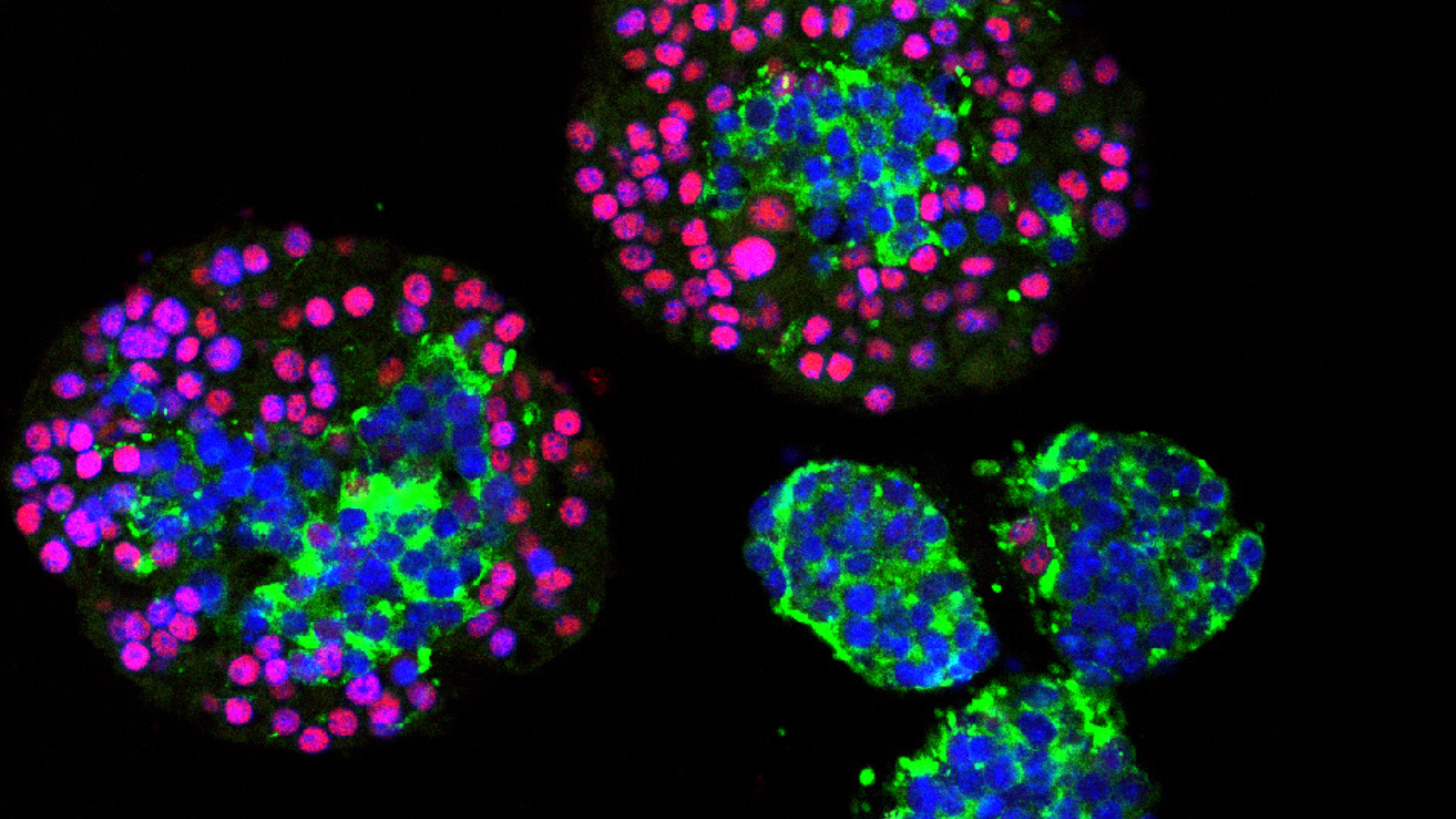
In this study, mouse prostate tumor organoids show a mix of neuroendocrine (green) and adenocarcinoma (red/pink) cells, revealing how prostate cancer can shift between these identities to evade treatment.
In a stroke of serendipity, the specific histone modification pathway that appeared to be most involved in the cells’ lineage transition was the same one Lu has been studying for several years. “It was quite satisfying that the pathway we have been working on ever since I came to Columbia was the one that came out as the top differentially regulated modification between neuroendocrine and non-neuroendocrine prostate cancers,” says Lu, adding that “we had no expectation of seeing this when we started.”
While that was great news for the collaboration, it made the next step of the project much harder. The enzyme that carries out the modification had been nearly impossible for drug developers to target. “The histone methyltransferase that we focused on, NSD2, had for many years been considered to be undruggable,” says Shen. That made it hard to get the work published. Shen explains that peer-reviewed journals required experimental proof that a drug could inhibit the enzyme essential for the cells’ lineage plasticity. The researchers uploaded the work on bioRxiv, a public site for scientific preprints, and searched for a breakthrough.
Around the same time, the pharmaceutical company Novartis developed the first small molecules that could inhibit NSD2. Shen, Lu, and a growing list of collaborators synthesized one of these inhibitors and showed that in organoids made of cultured cells and in animal models, inhibiting NSD2 with the drug caused neuroendocrine prostate tumors to lose the neuroendocrine phenotype. That alone isn’t enough to kill the cells, but when combined with androgen receptor inhibitors, the two drugs work synergistically, one attacking the cells and the other causing them to change lineages to respond to the attack.
Crucially, the study showed that this plasticity-driven treatment resistance is not a one-way street. When NSD2 was blocked, highly aggressive tumors that had already shifted into a neuroendocrine, drug-resistant state could be pushed back toward a more typical prostate cancer identity that once again relied on androgen receptor signaling. In other words, cancers that had stopped responding to hormone therapy became sensitive to it again. This is one of the first clear demonstrations that a form of treatment resistance in prostate cancer—driven by epigenetic plasticity—can be reversed, raising the possibility that future therapies could “reset” resistant tumors rather than simply trying to work around them.
Because lineage plasticity is a common feature of many cancers, the same approach might have broader applications. “We are already in collaborations to examine whether NSD2 plays a similar role in small cell lung cancer,” says Shen.
References
Additional Information
This paper, "NSD2 targeting reverses plasticity and drug resistance in prostate cancer" was published on November 26, 2025 in Nature.
Funding
Michael M. Shen is supported by NIH grants P01CA265768, R01CA251527, R01CA238005, and U01CA261822; by the Irving Cancer Drug Discovery Program, by the T.J. Martell Foundationand, and by the Prostate Cancer Foundation.
Chao Lu is supported by NIH grants R35GM138181, R01DK132251, and R01DE031873.
This study was supported in part by the Flow Cytometry Core Facility and the Genomics and High Throughput Screening Shared Resource at the Herbert Irving Comprehensive Cancer Center, which are supported by the NCI Cancer Center Support Grant P30CA013696.

