From Washington Heights to Santo Domingo: Advancing Colorectal Cancer Screening in the Dominican Republic

Washington Heights—often called “Little Dominican Republic”—is home to the largest Dominican population outside of the Dominican Republic itself. At the heart of this neighborhood sits NewYork-Presbyterian/Columbia University Irving Medical Center, an institution whose mission is closely tied to the health of the surrounding community.
For the Herbert Irving Comprehensive Cancer Center (HICCC), that commitment includes reducing cancer disparities through prevention, education, and access to care. Over the years, its Community Outreach and Engagement team has partnered with Dominican-serving organizations in Northern Manhattan to expand screening and awareness. In 2022, that mission extended beyond New York, directly to the island itself.
A Community Connection in the Dominican Republic
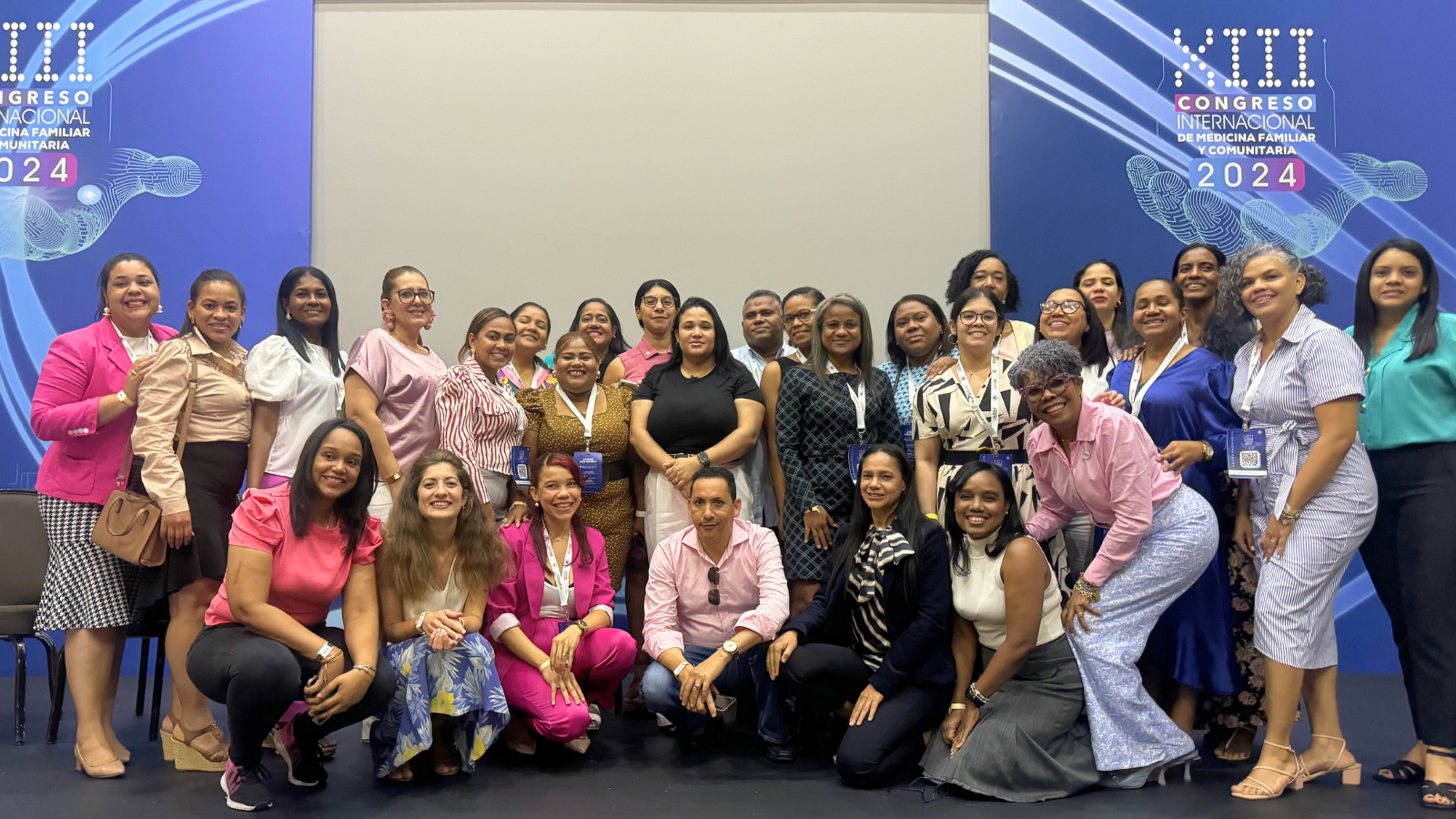
The effort was spearheaded by Rafael Lantigua, MD, a Columbia primary care physician who trained in the Dominican Republic and has long built medical partnerships between his home country and the medical center. Alongside colleagues, including colorectal cancer specialist Yoanna Pumpalova, MD, economic modeling expert Chin Hur, MD, and community outreach and engagement researcher Andria Reyes, MA, the team traveled to meet with physicians across six hospitals to explore opportunities for research and prevention collaboration.
“For many families in Washington Heights, the Dominican Republic is not just a place of origin, it’s home,” says Lantigua. “Improving health on the island is deeply connected to improving health here. This is about long-term collaboration and shared responsibility.”
The initiative was developed in partnership with physicians and researchers in the Dominican Republic, together with investigators from across the cancer center.
“By partnering closely with our colleagues in the Dominican Republic, we were able to combine local clinical insight with modeling and data analysis to evaluate what strategies might be most effective,” says Hur, co-leader of the Cancer Population Sciences research program at the HICCC.
As the team began conversations with Dominican health leaders, they quickly encountered a complex healthcare landscape. Health insurance in the Dominican Republic is divided between public and private systems, with additional tiers within the government-funded structure. Insurance not only determines what services are covered, but also where patients can receive care. With a mix of public and private hospitals, access to screening and specialty services varies significantly depending on insurance status and location.
In cancer screening, the gaps are particularly stark. Breast and cervical cancer screening are covered, at least partially, by both public and private insurers. But colorectal cancer screening of any kind is not covered by public insurance and is inconsistently covered by private insurance. As a result, there are no national colorectal cancer screening guidelines, and screening rates across the country are presumably very low – if not close to zero.
“In terms of national priorities, breast and cervical cancer have understandably received attention because of their high incidence,” Pumpalova says. “But colorectal cancer is also a major contributor to cancer burden in the country. We wanted to test whether a colorectal screening program could be both feasible and impactful in this setting.”
Finding the Right Screening Strategy

Partnering with Hospital General de la Plaza de la Salud (HGPS) in Santo Domingo, which had recently launched a pilot colorectal cancer screening initiative, the Columbia team worked closely with local investigators, including Dolores Magdalena Mejía De La Cruz, MD, Henry Rafael Quezada Marte, MD, Pamela Machado, MD, and Karla Marie Disla Pineda, MD, who helped lead the implementation and evaluation efforts on the ground.
Together, the group developed two complementary projects designed to assess both the economic feasibility of screening and the real-world challenges of putting it into practice.
The first focused on cost-effectiveness. In many high-income countries, new interventions—whether medications, procedures, or screening programs—undergo formal economic evaluation before adoption. In low- and middle-income countries, this type of modeling is less common, though potentially even more essential given constrained healthcare resources.
Using country-specific epidemiologic and cost data, the team built a model comparing three approaches: no screening; fecal immunochemical testing (FIT) every other year; flexible sigmoidoscopy every five years; and colonoscopy every 10 years. FIT is a non-invasive stool-based test that detects hidden blood in the stool, while flexible sigmoidoscopy examines only the lower portion of the colon and requires fewer resources than a full colonoscopy. A positive FIT result must be followed up with a full colonoscopy for pre-cancerous lesions to be removed or early-stage cancer to be diagnosed and treated.
The results were compelling. The FIT every other year strategy emerged as the most cost-effective, reducing colorectal cancer incidence by an estimated 30% and mortality by 37%.
“Importantly, FIT is not only effective, but feasible,” Pumpalova explains. “It requires fewer specialized resources than performing a screening colonoscopy on everyone and is significantly more affordable. That makes it a realistic option for broader implementation.”
The second project evaluated how the HGPS pilot colorectal cancer screening program using FIT functioned in practice. The team examined data from the first two years of the program, determining who completed screening, how many tests were positive, and whether patients with positive results received the necessary follow-up colonoscopy.
“Reviewing the screening data gave us a clearer picture of how the program is working in practice,” says Disla Pineda, who completed the retrospective chart review. “It highlighted both the progress that has been made and the gaps we still need to address to improve follow-up care.”
The analysis pointed to a critical gap.
“Screening uptake was lower than we would hope,” says Pumpalova. “But most concerning was that among those with a positive test, very few completed the follow-up colonoscopy. That’s where screening truly becomes lifesaving.”
Without diagnostic follow-up, the benefits of early detection are lost.
Turning Early Findings Into Next Steps
The next phase of the collaboration will focus on understanding why the follow-up isn’t happening. The team will conduct a qualitative study involving interviews with primary care patients and providers to explore barriers to screening and follow-up care—whether financial, logistical, structural, or related to awareness and trust.
“Before you can design solutions, you have to understand the lived experience of patients,” Pumpalova says. “We need to hear directly from people about what is preventing them from completing screening and follow-up.”
The ultimate goal is to provide Dominican health leaders with evidence-based recommendations grounded in both economic modeling and patient experience, data that can inform national screening policy and resource allocation.
With the modeling complete and the qualitative study about to begin, the collaboration is entering its next stage—translating research into practical guidance that could shape colorectal cancer screening efforts across the country.
Pumpalova notes that the collaboration itself has been central to that progress.
“The partnership with our colleagues in the Dominican Republic has been transformative,” she says. “By working across communities and across countries, we can learn from one another and design stronger more sustainable approaches to prevention.”