

Notes from the Lab: Mapping Racial and Ethnic Trends in Breast Implant–Associated Lymphoma
The Cancer Problem We Are Solving
Anaplastic large cell lymphoma (ALCL) of the breast is a rare type of cancer that has been linked to textured breast implants. Some of these implants (like Allergan Biocell) were recalled in 2019, but other textured types are still available and used in certain situations. Today, many surgeons choose smooth implants for reconstruction to help lower risk. When breast ALCL does occur, it usually develops years after implant surgery.
Even though it’s rare, the number of reported cases has increased over the past decade, and there’s still very little comprehensive research looking at how breast ALCL affects different racial and ethnic groups in different ways in the United States.
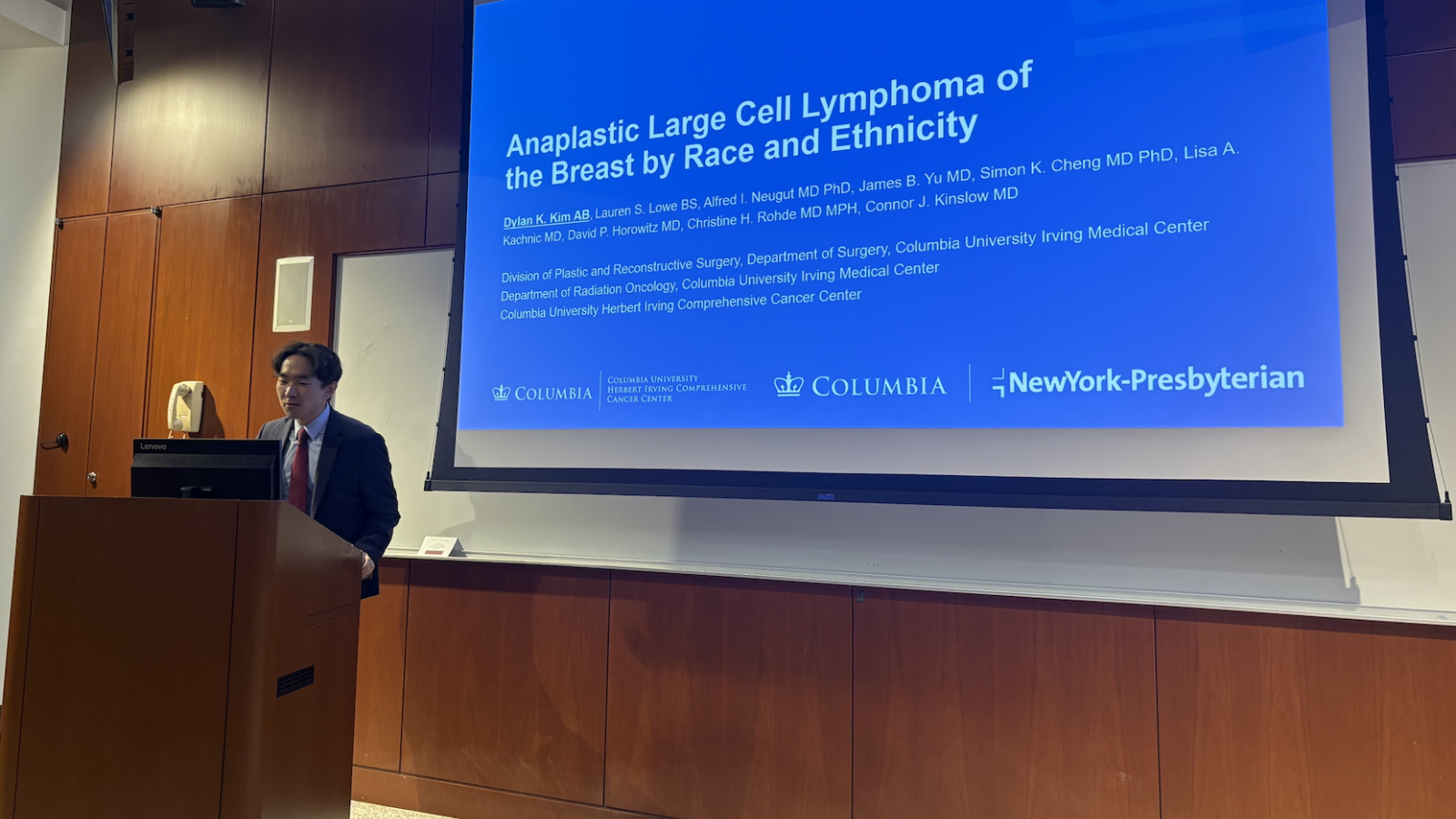

The Research
“Anaplastic Large Cell Lymphoma of the Breast by Race and Ethnicity”
Using data from the Surveillance, Epidemiology, and End Results (SEER) Program, a large national cancer database that represents about 27% of the US population, our research group, led by principal investigator Connor Kinslow, identified all cases of breast ALCL diagnosed since 2000. We then examined how incidence changed over time and compared trends across racial and ethnic groups in the U.S.
Among a cohort of more than 800 million women across 20 years, we identified 90 women diagnosed with breast ALCL. Over the study period, incidence increased more than four times. The highest and fastest-rising rates were seen among non-Hispanic white and Hispanic patients, while rates in other racial and ethnic groups remained relatively stable.
For context, overall lymphoma rates in the U.S. declined slightly during the same period. At the same time, breast reconstruction with implants increased by more than 90%, with the highest use among non-Hispanic White patients.
What This New Research Uncovers
Our findings show that the rate of breast ALCL has risen sharply over the past 20 years. The increase appears to be driven largely by white and Hispanic patient groups. One possible contributing factor is the rise in implant-based breast reconstruction. White patients, in particular, have historically had higher rates of both breast reconstruction and cosmetic breast augmentation with implants compared to other racial and ethnic groups.
Next Steps
We hope these findings can help patients and clinicians make more informed decisions about breast cancer surgery and reconstruction and provide clearer counseling about the potential risk of ALCL following implant-based procedures.
We plan to continue monitoring the incidence and characteristics of breast ALCL in the U.S over time. We are also beginning to explore whether breast implant use may be linked to other cancers beyond ALCL, including diffuse large B-cell lymphoma, which has been reported in the medical literature.
A Bit of Background
Our group has previously studied breast anaplastic large cell lymphoma (ALCL) in the U.S., describing its incidence and its relationship to implant-based breast reconstruction to inform our current study. To our knowledge, we were the first to provide a population-based estimate of ALCL risk following implant-based reconstruction. While we found that the relative risk is significantly increased, the absolute risk remains extremely low, and we do not believe, at this point, that women should be dissuaded from pursuing implant-based reconstruction based solely on this risk.
We have also looked at other cancers that may be linked to breast implants, such as squamous cell carcinoma, which has been raised as a possible concern by the FDA.
References
Explore More ALCL Research from Columbia
Incidence of Anaplastic Large-Cell Lymphoma of the Breast in the US, 2000 to 2018