

No Time to Waste: A Lawyer’s Unconventional Path to Cancer Research at Columbia
After a family history of cancer, a former NYC law firm partner takes on BRCA2 research at Columbia.
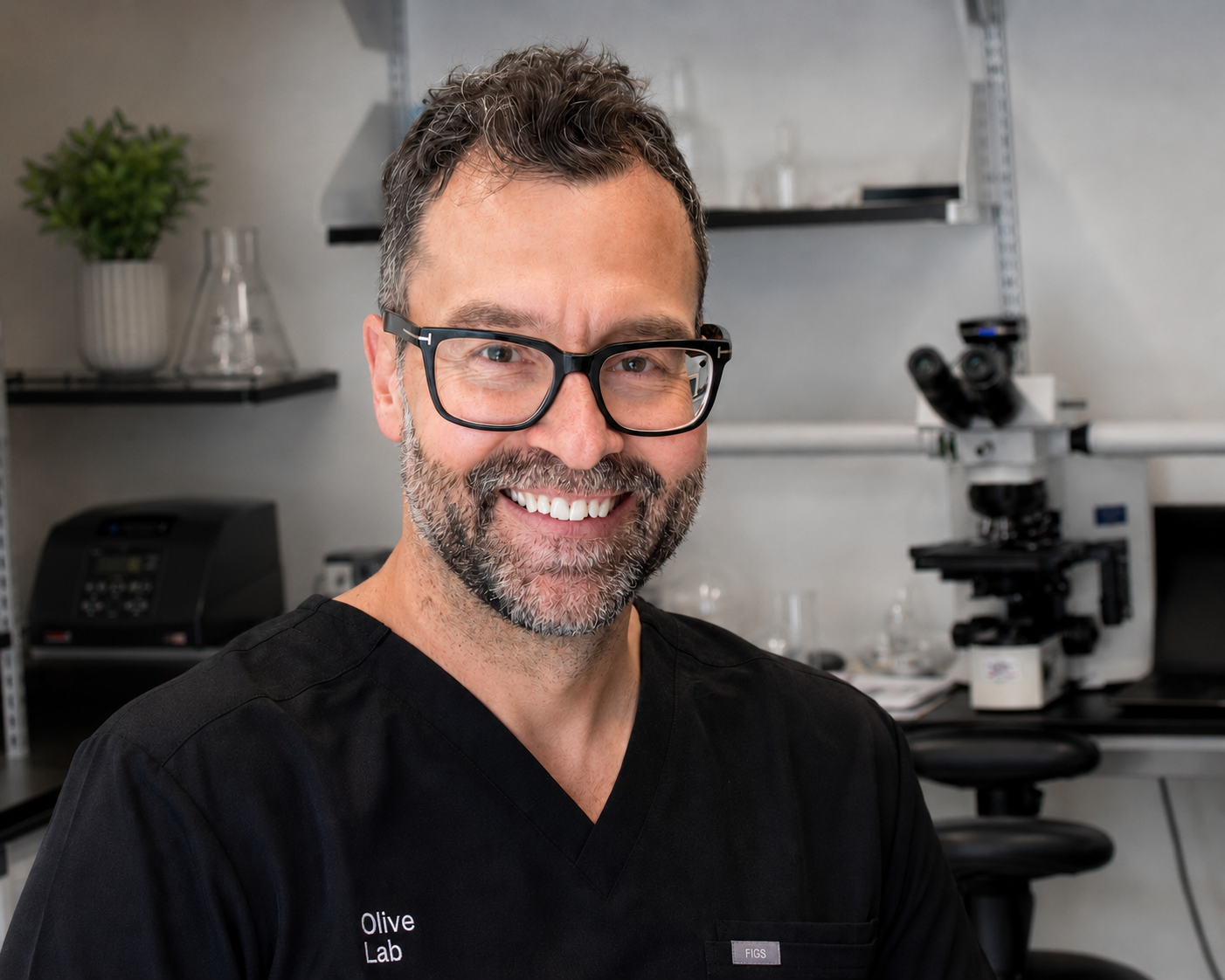
Four years ago, Filko Prugo was leading teams of attorneys as the head of the life sciences patent litigation group at an international law firm in New York City. Today, he is pursuing a PhD focused on BRCA2, the same inherited cancer mutation that has devastated his family for generations.
Growing up, Filko was keenly aware of cancer’s deadly toll. His paternal uncle died from gastric cancer at 33. Years later, his father developed melanoma at 60, underwent treatment, became cancer-free, and then later developed a rare extraskeletal osteosarcoma before dying at 73.
“If you’ve ever been close to someone going through cancer, you understand what it means to fight it,” Filko says. “It’s a horrific disease.”
At the time, he did not connect the cancers affecting different members of his family. That changed when his brother was diagnosed with metastatic breast cancer at 47.
“Obviously, a man with breast cancer is a red flag in terms of genetics,” Filko says.
Testing revealed that his brother carried a pathogenic BRCA2 mutation, an inherited genetic alteration linked to increased risk for several cancers, including breast, ovarian, pancreatic, prostate, melanoma, and gastric cancers. When Filko’s mother tested negative for the mutation, the family realized it had come from his father’s side.
“Then everything clicked,” Filko says. “My uncle’s early gastric cancer. My father’s two primary cancers. My brother’s breast cancer. The mutation explained it all.”
My heart wasn’t in law anymore. Suddenly, all I could think about was why my brother died and how I could stop the same thing from happening to me.
Intercepting fate, turning to research
During his brother’s illness, Filko learned that he also carried the mutation.
“All of a sudden, your world shifts,” he says. When he learned about his own genetic predisposition, Filko was working as a partner in patent law in the life sciences sector. Before law school, he studied chemistry as an undergraduate, graduating first in his class, and later earned a master’s degree in biotechnology from Johns Hopkins University while continuing to practice law.
During his brother’s battle with metastatic breast cancer, Filko drew on every resource available to help him. But even with access to leading doctors, researchers, and extensive professional resources, his brother later died from the disease.
“My heart wasn’t in law anymore,” Filko says. “Suddenly, all I could think about was why my brother died and how I could stop the same thing from happening to me.”
The diagnosis also changed how he thought about his three children, who each have a 50 percent chance of inheriting the mutation.
“If I was a billionaire, I would be investing in the science,” he says. “But I don’t have capital like that to deploy across research institutions.”
Instead, Filko decided to pursue a PhD and study BRCA2 biology himself. Giving up his law career came with enormous uncertainty. He knew he might dislike research, fail to make meaningful discoveries, or eventually have to start over in an entirely different field.
“One of the things you have to confront is the possibility of failure,” Filko says. “I’m trying to do something high-risk, high-reward. And it may not work.”
Despite the risks, Filko says his desire to contribute to unveiling the biology behind the disease affecting his family far outweighed any doubt.
Columbia quickly became his top contender for pursuing this new path. He wanted to remain in New York, where his family’s life was already established, and he wanted to train at a comprehensive cancer center with strong translational cancer research.
He applied to Columbia’s pathology program and interviewed with several faculty members, including Alison Taylor, PhD, Richard Baer, PhD, Kenneth Olive, PhD, and Anil Rustgi, MD, director of the Herbert Irving Comprehensive Cancer Center (HICCC). Each was struck not only by his story, but by the clarity of purpose behind his decision.
When he applied, Filko says there was relatively little translational research at Columbia focused specifically on BRCA2. But he did find one lab whose work touched on BRCA-associated pancreatic cancer and preclinical disease modeling: the lab of Kenneth Olive. Filko immediately connected with Olive’s curiosity-driven approach to science, as well as the ambition and breadth of his vision—to cure pancreatic cancer.
Learning a new pace of success
Starting the program would require some adjustments. After years leading teams of attorneys and major patent litigation, Filko suddenly found himself back at the beginning of a completely different career path.
“Early in the interview process, Dr. Rustgi asked me, ‘How are you going to go from being a partner, managing people and making decisions, to starting over as a brand-new graduate student?’” Filko says.
But Filko says one of the hardest parts was not the loss of status or the day-to-day tasks. It was learning to live with the uncertainty, frustration, and failure that come with scientific research.
I can’t lose my motivation, because I can’t lose the gene.
In law, Filko says, there are usually known facts, legal frameworks, and arguments that shape likely outcomes. Research felt fundamentally different.
“You’re searching for something no one has found before,” he says. “So, by definition, you don’t know what you’re looking for.”
Today, Filko’s research focuses on understanding how BRCA2 mutations influence pancreatic cancer development. Using mouse models, he studies how cells outside the pancreas that carry Brca2 mutations may contribute to the development of pancreatic ductal adenocarcinoma—and how that process might one day be intercepted or prevented.
The pace of discovery in the lab also required adjustment. Experiments that initially seem simple can take weeks to optimize, and many ideas ultimately do not work. But Filko says the possibility of discovery continues to motivate him.
“Usually you find nothing,” he says. “But sometimes you do. And that keeps you going to the next experiment.”
Throughout the process, he has never lost the motivation that brought him into the field in the first place.
“I can’t lose my motivation, because I can’t lose the gene,” he says. “My risk is always with me. I watched my brother and my father at the end of their lives, and that changes how you see things. In a way, it frees you.”
Moving the dial
Filko’s journey has also connected him with a broader community of people affected by hereditary cancer syndromes. He has met others whose lives were reshaped by learning they carried BRCA mutations—people who changed careers, pursued medical degrees, launched foundations, or dedicated themselves to advocacy and research. Filko also participates in clinical trials aimed at improving understanding of BRCA-related cancers.
Filko says living with inherited cancer risk changed how he thinks about success and purpose.
“What if I help move the dial just a little?” he says. “What if something I discover, or my participation in a clinical trial, helps create a future where my daughter doesn’t have to have her fallopian tubes removed?”
Now entering the final year of his PhD program, Filko is considering what comes next, including the possibility of pursuing a postdoctoral project focused on testing the therapeutic potential of ideas generated during his doctoral work, with the eventual goal of spinning out a company around the research.
“It’s very hard to be successful in this space,” he says. Even if the work does not succeed, Filko says the pursuit itself has meaning. “In research, I’ve learned that even failure can be worthwhile,” he says. “At least I tried, right?”
References
Related Stories
For Young Women with Breast Cancer, Aggressive Surgery May Not Mean Better Outcomes
Columbia Research Helps Propel Daraxonrasib, a Potential New Standard of Care for Pancreatic Cancer
Targeting KRAS: Promising New Therapy for Hard-to-Treat Lung Cancer Subtype