
Beyond Breast Density: Why Breast Cancer Screening Needs a More Personalized Approach
As breast density notification becomes more widespread, millions of women are learning they have dense breasts — an important piece of information about breast cancer risk. But for many patients and their providers, that knowledge does not come with clear next steps. Current screening guidelines offer limited and sometimes conflicting direction, leaving patients in an uncertain space between awareness and action.
In this Q&A, Julia McGuinness and Elena Elkin, members of the Cancer Population Science Program at the Herbert Irving Comprehensive Cancer Center (HICCC), discuss why breast density alone is not enough to guide screening decisions — and how the field is moving toward a more personalized, risk-based approach.
What do current guidelines for dense breasts actually say — and where do they fall short?
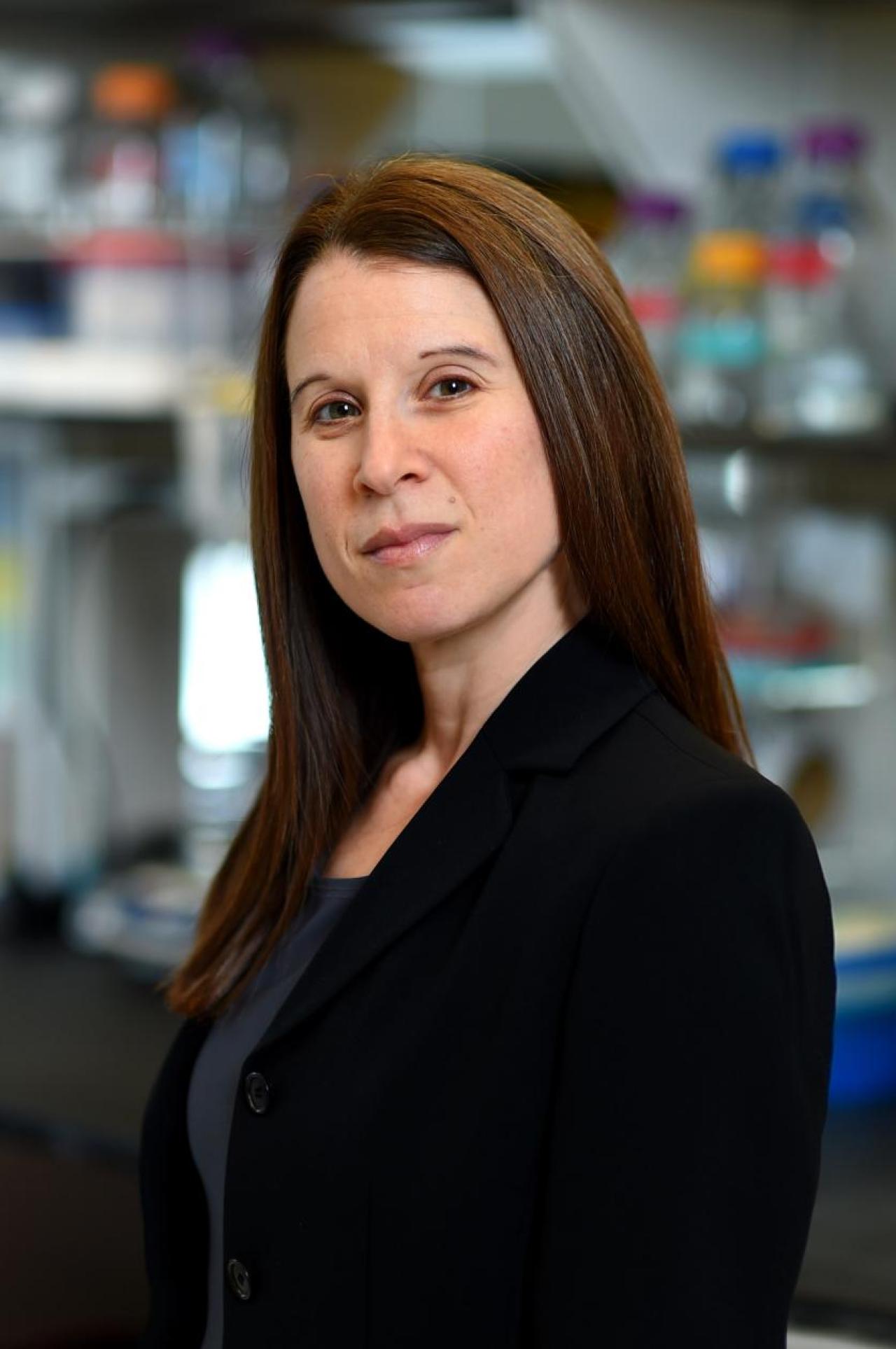
ELENA ELKIN, PHD: As the research on breast density progressed, there was a growing awareness that women with dense breasts not only have an elevated risk of developing breast cancer, but also that standard screening mammography is less sensitive in detecting breast cancer for these women. The breast density notification laws came out of that ground-level, grassroots advocacy.
JULIA MCGUINNESS, MD: From a clinical perspective, there are screening guidelines for patients with dense breasts who are considered at high risk for breast cancer, but not for those who might be average risk. While the notification laws have empowered women with knowledge about one of their potential risk factors for breast cancer, they have also added some confusion and uncertainty into the clinical decision-making, both for patients as well as their doctors.
Approximately 40% of women have dense breasts, so this affects a large population. Many of these patients are left in an unclear space, unsure what to do next or whether additional screening will even be covered by insurance.
So dense breasts are one factor of being considered high risk, but without a formal risk assessment, there are no clear next steps?
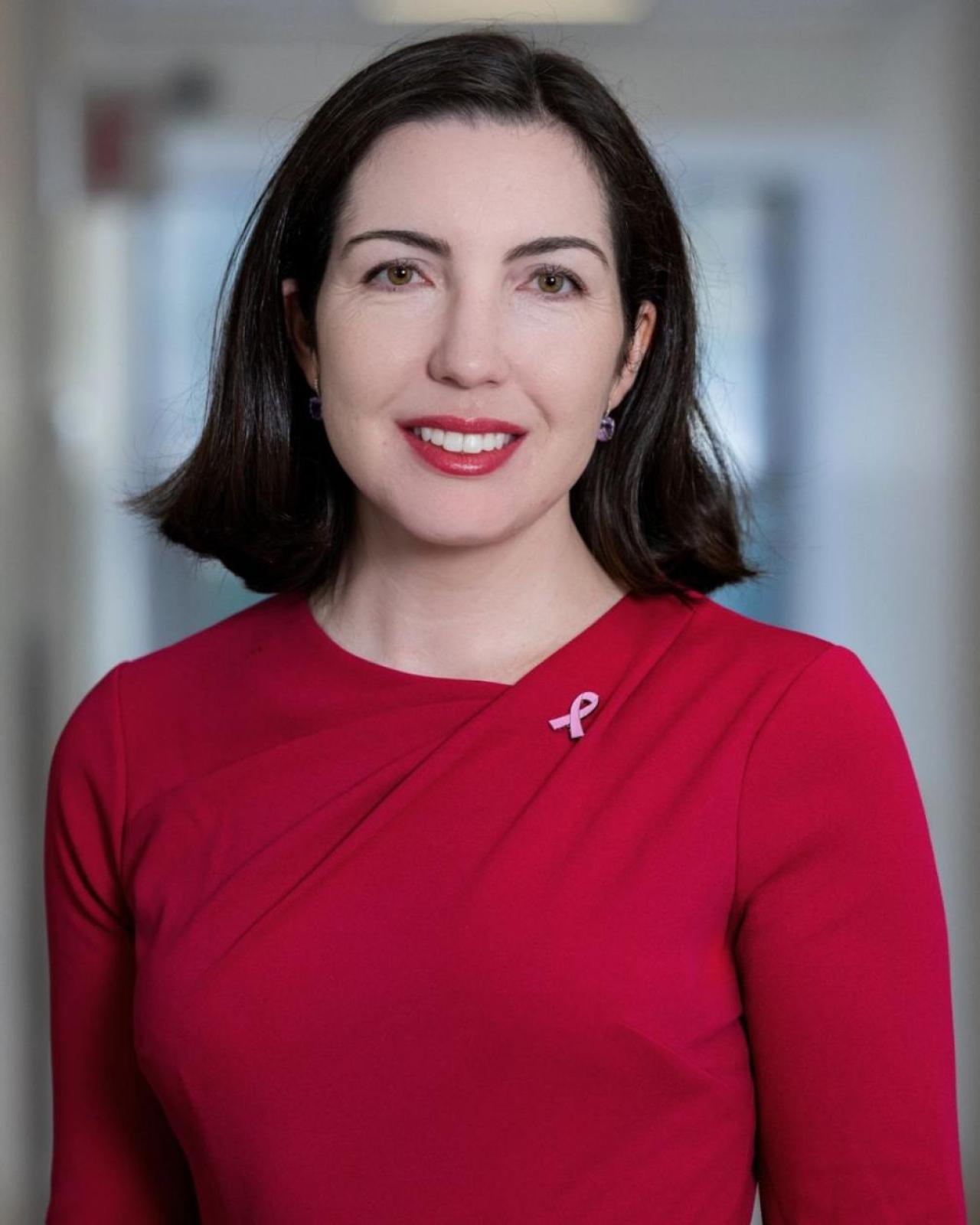
ELKIN: That’s right. Dense breast notification should prompt a conversation. But if a formal risk assessment has not been done, there are no clear, consistent recommendations for what should happen next. And even when risk is assessed, guidelines still vary across organizations.
MCGUINNESS: We really cannot interpret breast density in isolation. It has to be considered as part of a broader risk assessment, and that is where things get complicated. Until relatively recently, there was limited education and training around breast cancer risk assessment, even though the tools have existed for years.
The tools themselves are also part of the problem. There are multiple breast cancer risk models, which makes it difficult for primary care providers to know which one to use. And risk assessment takes time. Primary care clinicians are already being asked to assess patients for many chronic diseases and preventive needs, so adding another complex evaluation creates a real burden — one that is not yet fully supported or reimbursed.
How might we better implement high-risk screening tools?
ELKIN: As Dr. McGuinness said, we already ask a great deal of primary care providers; this is just one more screening tool we are asking them to do.
And this is one more assessment being added to the list. Right now, there are significant barriers to incorporating breast cancer risk assessment into routine primary care. We have also not fully tapped the potential of electronic health records (EHR) — and possibly AI — to support this work.
MCGUINNESS: Yes, and the tools we have in our EHR are imperfect at best. The relevant data are often difficult to extract and standardize, which makes it harder to build reliable systems around them, including AI-enabled ones.
Our risk models are also imperfect. Many clinical risk models were originally developed and validated among populations of predominantly White women, so some models may not perform as accurately in racial and ethnic minority populations. That is a major equity issue that needs to be addressed.
At the same time, risk assessment is becoming even more sophisticated. In the coming years, I expect we’ll increasingly incorporate polygenic risk, which looks at the cumulative effect of many small genetic variations rather than a single high-risk gene like BRCA1 or BRCA2. That could improve accuracy, but it will also make implementation more complex.
From a research perspective, what are some newer innovations in understanding breast cancer risk?
MCGUINNESS: On the clinical side, there is a great deal of work focused on identifying more personalized risk factors and even earlier biomarkers for breast cancer. For example, I’m working with Despina Kontos and her team to evaluate artificial intelligence and computational models that identify subtle features on a mammogram that may better predict breast cancer. At the same time, newer imaging techniques like higher-resolution MRI and contrast-enhanced mammography could help improve cancer detection rates and risk stratification.
And when it comes to implementing risk models in real-world care, Kathy Crew is addressing this challenge from several angles — from improving decision-making around chemoprevention to making better use of the EHR for risk assessment.
ELKIN: Public health researchers are also exploring biomarkers of risk, especially as it relates to behavioral and environmental factors. For example, Rebecca Kehm and Mary Beth Terry are studying how factors such as physical activity and stress may influence breast cancer risk, especially for early-onset cancers and during key developmental windows like puberty.
This research is still evolving, but it could ultimately help move us toward a more tailored approach to screening.
Implementing breast cancer risk models is a truly complex and structural issue. What is being done right now to take some steps in the right direction?
ELKIN: Trials such as WISDOM suggest that we may be moving towards more personalized screening strategies. Large population-level studies like this one may be a catalyst to bring greater alignment to screening and risk assessment guidelines and bring us closer to more tailored recommendations.
We’ve seen something similar in lung cancer screening, where the need for risk assessment is well-accepted because of the very clear relationship between smoking history and lung cancer risk. But even there, one of the biggest challenges has been getting risk assessments done consistently enough to prompt screening. Uptake remains lower than we would like.
So even if breast cancer screening guidelines become clearer, implementation of routine risk assessment will still be a major hurdle. We are not there yet, but studies like WISDOM are encouraging.
MCGUINNESS: I do think we are moving in the right direction, both in identifying more accessible ways for patients to complete risk assessments and in trying to reduce the burden on primary care providers. One promising direction is a more direct-to-patient risk assessment approach.
The challenge will be how to scale those tools in a way that is equitable and works for all patients. That is the key issue. We are trying to make screening more personalized, but we also must make sure the system can support that level of complexity.
What is the most important takeaway right now?
MCGUINNESS: Breast density matters, but it should not be viewed in isolation. What we need is a more comprehensive, risk-based approach that helps determine which patients are most likely to benefit from additional screening.
ELKIN: And to make that possible, we need better tools, clearer guidance, and systems that make risk assessment feasible in routine care. The goal is not simply more screening — it’s smarter, more personalized screening.